
The best approach to sales is just talking to your customer like a normal person. Tell the story of your work, show people how it fits into their life, then tell them what’s available, where to get it, and how to buy. If you’ve bonded with the right people, the ask can be almost embarrassingly simple. It’s a link and a sentence.
That’s really what to say when selling your art. The hard part is saying it at all.
I’ve talked with hundreds of creatives, and they are almost all universally terrified of selling. So before we get to the actual words, let’s talk about why.
Why do creatives freeze when it’s time to sell?
A while ago I was on a call with a friend of mine, an incredibly talented YouTube educator known for her research and data-driven content. She’d been working on a big launch, and she confessed something:
“Kelsey, I think I just need to get over myself. I know that it’s possible to be a good person and sell things, but I just cringe away from pitching myself every single time.”
I’d bet every dollar I have that most of you feel the same way. You hate writing calls to action. You hate talking to customers about price. And it isn’t because you don’t think your work has value. You know it does. It’s that the emotional experience of selling feels off. Coercive, manipulative, uncomfortable.
None of that is your fault. I’ve never heard of an art school that teaches basic sales copywriting. We’re taught how to make art, and then… nothing. Plus a lot of messaging that mixing art and commerce is “impure.”
So we hide purchase links at the bottom of our posts. We apologize for our prices. We cringe every time we promote our work.
And then we wonder why no one’s buying!
I’ve had this exact call with professionals who have 100K+ followers and are barely making rent.
Frankly, after a certain skill threshold, your artistic talent has almost nothing to do with your financial success. I know that sucks to hear. Brilliant artists struggle while others with more average skills thrive, and the difference is how good they are at sales. (More on that in why top creatives aren’t more talented.)
The good news? It’s a learnable skill.
Is selling your art selling out?
There’s this persistent message, especially in art communities, that it’s shameful to care about money. That selling your art “compromises your creative integrity.”
I think it’s bullshit.
Caring about sales and financial stability doesn’t make you a bad person. Keeping your artwork personal doesn’t by default make you a good one. (After all, only Sith deal in absolutes.)
It is completely fine to want to make money from your creative work. I actually think it’s very difficult to make your best work when your whole headspace is worried about money. Wanting a six (or dare I say even SEVEN) figure business from your creative practice is neither impossible nor morally corrupt. (More in the starving artist myth.)
The used car salesman problem
The fear I hear all the time: promote your work basically at all and you’ll Animorphs-transition into a sleazy, oily-haired used car salesman.
But just because there’s a bad way to do sales doesn’t mean there isn’t a good way. And no matter how many views you’re getting, people will not buy from you if they don’t know what you’re selling, who it’s for, and how it can help them.
You might not even need more followers. You might be able to 10X your business just by selling to the ones you already have.
How do you sell art without feeling salesy?
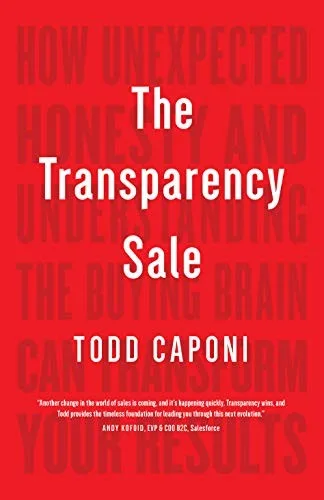
In The Transparency Sale, Todd Caponi talks about how the best approach to sales is talking to your customer like a normal person. Being honest about the benefits of your work, and if it has flaws or might not be for someone, talking about that too. “Hey, I want to help you make the best choice for you, even if that means you don’t buy from me.”
Imagine a car dealership doing that. It would build so much more trust.
That’s how I try to run my business:
- I don’t hide my prices.
- I don’t do high-pressure sales calls.
- I don’t mislead people about expectations.
Instead, I use testimonials, build trust, and share my journey (both the good and the bad).
A bad sales experience sticks
I learned this from the other side. I got on a sales call for a program I was excited about (only because the price wasn’t listed), and at the end the salesperson told me to take out my wallet and join right that second, or the doors were closed. I wanted a few hours to think. They literally would not let me.
I purchased. The program did exactly what it said it would. But I felt coerced, and it colored my whole impression of that creator.
The choice to purchase is driven by emotion as much as logic. Lean too hard on false scarcity and you build a bad impression of your business in your customer’s mind. (The alternative, belief building, is in the business books I’d read to grow to $100K.)
Don’t let your work “speak for itself”
What does that even mean? Say things out loud, please. Talk about the feelings behind your work, the stories you’re trying to tell, your worldview. Describe it to your customer. Build that relationship.
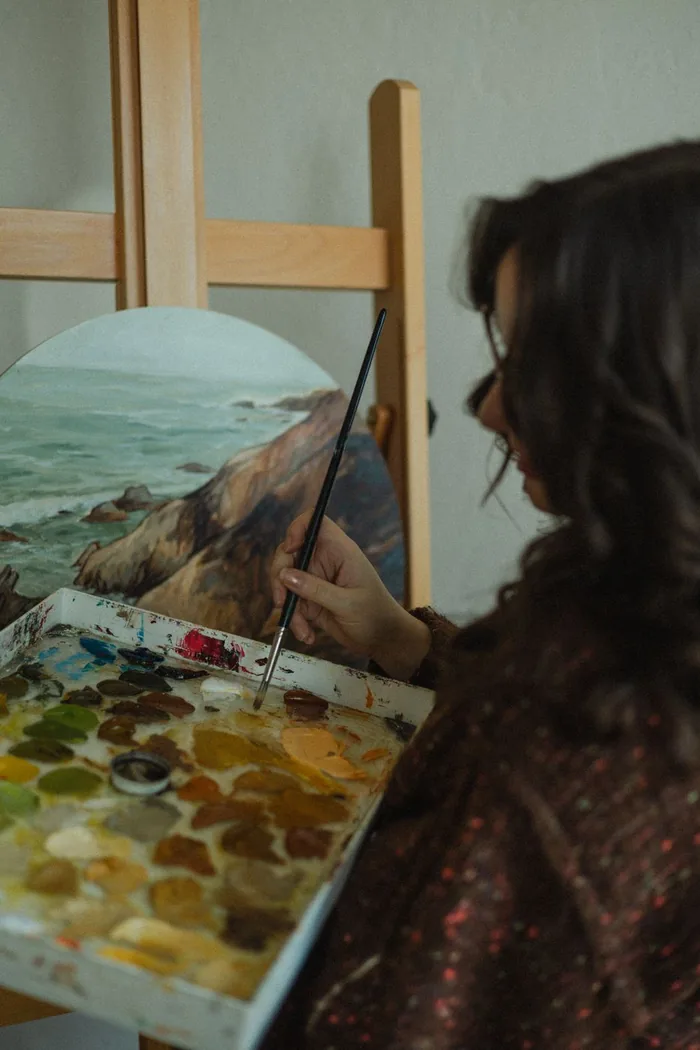
Stop hiding your links and apologizing for your prices
Your art probably isn’t the problem. How you’re talking about it is. And the shame around promoting your work costs you in two big ways:
- You’re very likely undercharging, because you wonder if you’re “good enough” to charge more.
- You’re not talking about your products enough, so no one’s buying simply because they don’t know there’s anything to buy!
If your work genuinely helps people, keeping it from them isn’t humility. It’s a disservice.
What to say when someone says it’s too expensive
When you start charging what your work is worth, people will say, “Oh, I love your work, but I just can’t afford it.” They’ll ask for discounts. Anchor in the experience you want to deliver and say something like:
“I’m not willing to compromise on this experience. I’ve worked with people where I was underpaid, and frankly it wasn’t enjoyable for me or for them. I want to be exceptional in my industry and known as someone who goes above and beyond. To do that, I have to charge a certain price. This is what it costs.”
No apology. (The full pricing conversation is in stop undercharging for your art.)
Once DMs get busy, this is also why I like a website where the price is the price. Pay it or don’t. Who cares.
Are you annoying people by selling too much?
No.
People only ever see a fraction of what you post. They watch like 30% of your videos. On a good day maybe ten percent of your followers see any given post, and most of them were half-watching while doing something else.
When you talk about your work and your offers multiple times a day, every single day, you are not annoying anyone. You are reminding them that you exist.
Same goes for past customers. They bought because they like your work. Reminding them you have other stuff is not greedy. It is being good at your job. (How I email past customers is in how to organize your creative business.)
I used to think people would unsubscribe in droves over my calls to action. What actually happened is that my sales went WAY up, because people finally knew I had products they could buy. And virtually nobody ever complains.
Ask for the sale (every time)
This is the part everyone forgets, and it’s the most important. We have to ask for the sale.
A call to action at the end of a post, or a whole sales email. It’s the least clever part of the strategy, but it HAS to be there.
I can’t tell you how many creatives spend months on a beautiful collection… and then post about it once. When it doesn’t bring an avalanche, they spiral. But their audience never saw it.
A simple framework: persuasion, problem, pitch
1. Persuasion: tell the story of your work. People like to buy things from other people. Maybe you’re creating to deal with grief, or out of a love for your home. Talk about that.
2. Problem: connect your work to your audience’s life. Maybe your colorful paintings brighten up a sterile apartment, or your ceramic mugs make morning coffee feel like a ritual. Show them that picture.
3. Pitch: actually invite people to buy. Tell them what’s available, where to get it, and create a sense of gentle urgency. Make it easy to say yes.
What asking consistently does
Asking every time really does move the numbers. Here’s what one artist in the Creative Accelerator shared in our wins space:
3–10% click-through to my Patreon EVERY TIME since the CTA workshop.
 ItsWarlockJemma · artist
And Alex Boon (who runs The Nature Journaling Circle) ran his first webinar and sold 10 spaces on his new course, $2,000+ in two hours.
I just did my first webinar and sold 10 spaces on my new course before I had even finished speaking.
More like these on the student wins page.
One caveat: if you’ve only ever posted timelapses, your launch post lands in front of people who want to learn your technique, not buy from you. Your audience doesn’t hate you. They’re just not the right people for that offer. (That’s what bond content is for. The whole system is in my content strategy for artists, and if you’re getting likes but no sales, start with why artists aren’t making money.)
What to actually say: real wording, from gentle to direct
Here’s wording I’ve used myself or suggested to other creatives, from gentlest to most direct. Steal it.
-
In your content (gentlest): connect it to something they already love. For an illustrator whose work feels cozy and nostalgic: “If you love Over the Garden Wall and Frog and Toad and you want to live a hobbit lifestyle, this zine is for you.” For an architectural conservator who draws historical landmarks, talk about the old buildings her audience loves, then: “Hey, here’s my work. It’s very similar to this thing you also like.” (The call to action can be better than that, but you get the point.)
-
At the end of a post: a link and a sentence. “Hey, if you’ve been enjoying my work, here’s how you can support me.” That’s it. Put one in every Reel and post. A ManyChat automation (someone comments a keyword and gets the link automatically) can send them to the page for one specific print, which beats a link to your whole site. On YouTube I say it three times (beginning, middle, end), a casual sentence each time. (Why the early one matters: the YouTube monetization changes.)
-
In your stories: what it is, what it costs, how to buy. “Hey, my name’s Kelsey. I have this piece I just finished. Do you want to buy it? It costs this much. Just reply to me to purchase.” Someone replies, I send an invoice. (The start-from-zero plan is in how to sell art with no followers.)
-
In your emails: something worth reading, then the ask. Write about the stories and origin of your work, then end with: “Hey, I have this piece available. Just so you know, it’s here. It might not be here next time. It might sell, who knows?”
-
After someone buys (most direct): offer the next thing. They’re at peak trust. On the thank-you page: “Hey, I’m so glad you bought this. Thank you for supporting my work. Just so you know, I open commissions four times a year and I have two spots available right now. If you want something else, now’s your chance.” Or a few days later: “Hey, I have prints of this same piece if you want to give one to a friend.” Offers that make sense in context aren’t unwelcome. People actually say thank you. (More in how to raise your average order value.)
Whenever I send an email, I make money. Over Labor Day, I ran a sale on a bundle of my digital products and made over $2,800 by sending one email to my list.
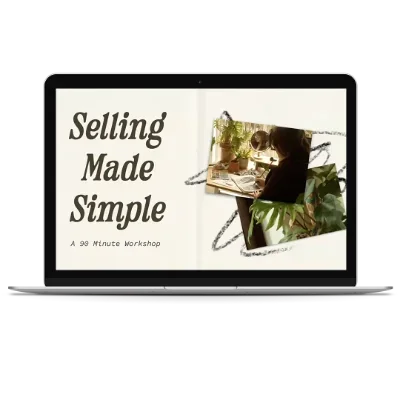
for when you freeze at the price part…
Selling Made Simple
The exact words for your own work: three ways to sell, from gentle to direct, a 30-second way to go from talking about your work to inviting a purchase, and a fill-in-the-blank email template.
Get the workshop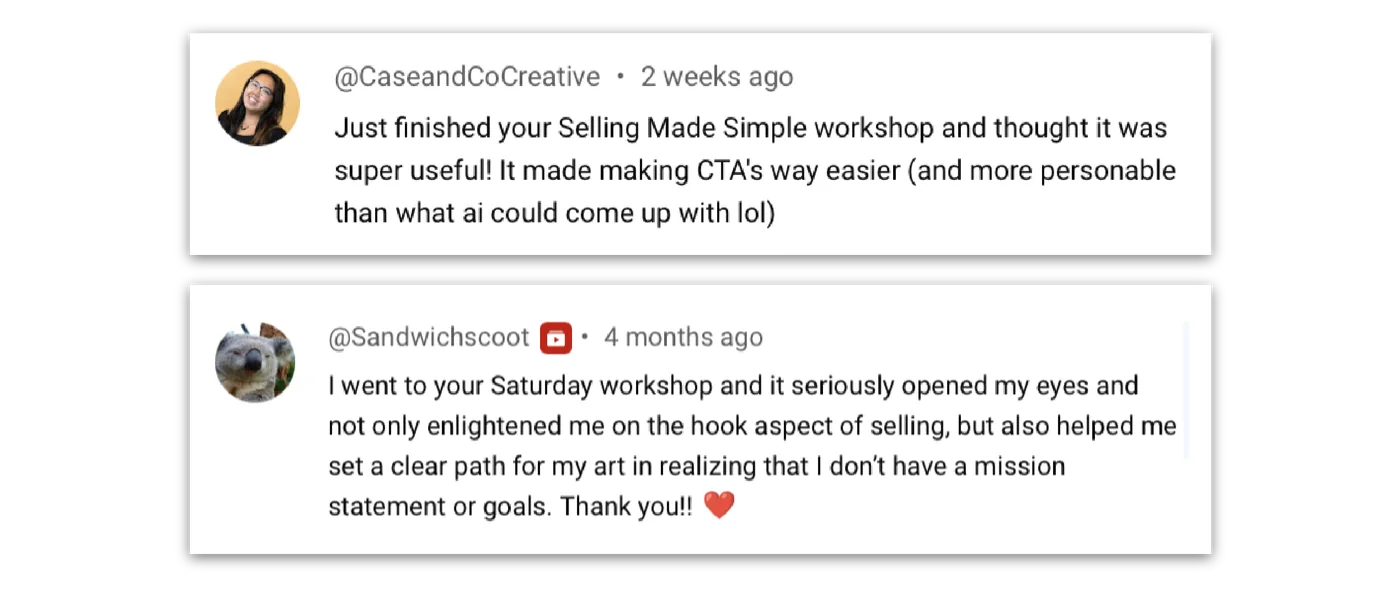
How do you sell with confidence when you don’t feel confident?
I’ve struggled with confidence for most of my life. Even after going full-time in 2022, I didn’t offer services people were begging me for, because I didn’t feel “qualified.” The turning point was taking 1:1 calls with creatives. Each testimonial was a small vote of confidence.
Confidence in selling is just about clarity. When you’re clear about the value you provide, selling stops being “convincing someone to buy” and becomes connecting your work with the people who need it. And clarity comes from doing it. Confidence is a result of evidence. (That whole story is in confidence is overrated.)
You don’t have to do it perfectly. You just have to do it again.
I know you’ve got the creativity part down. Now let’s make sure you have the selling skills to match.
Talk soon,