
I spent two weeks on a video once. Shot it, reshot it, agonized over the edit. Posted it completely convinced it’d get 100K views in the first month.
It flopped.
And then the next week, I put something together in like an afternoon, posted it barely thinking about it, and it took off 💀🤦♀️
Why are our intuitions about what content will work often so unreliable?
The answer is simple: we’re not our audience. The things that feel exciting or impressive or interesting to US are very often not the things our audience really cares about.
We’re too close to the work.
And when we’ve poured two weeks into a project, we want it to perform. That emotional investment creates a bias.
We convince ourselves that it’ll work even if it obviously won’t.
But the good news is that you can absolutely train your intuition. It’ll take time, but you can eventually become a pro at figuring out what will get views.
It co-opts a tool our brains are GREAT at, which is pattern recognition.
The exercise I find useful for training your intuition is super simple.
Go find your ten most-viewed pieces of content over the past year (or ever!). Then find ten that basically went nowhere.
Put them side by side and ask:
- What do the members of each group have in common?
- And what are the big ways these two groups differ from each other?
Look for big structural patterns. Think hook, topic, tone, lighting, and format.
We’re applying this exercise to views right now, but you could just as easily do this for any metric you care about (email signups, sales, etc).
When your intuition is wrong, try to get curious about it instead of just feeling like shit. Ask yourself why you were so confident.
What did you fundamentally misread about your audience?
Because a flop is just data.
It’s not the end of the world. But if we want to avoid flop after flop, we need to figure out what has to change.
I find that when I treat my content performance like a little experiment rather than a referendum on how good I am at my job, I make way better decisions.
Here’s how I’m implementing this.
Below is what I found going through this exercise myself. I’ve been creating content for a while, so I just gave myself about a year or so of time to study.
The differences between the top and bottom row are really subtle in terms of packaging, aren’t they? I use the same font, same basic structure of “picture of me + text”, and we’re covering the same general topic.
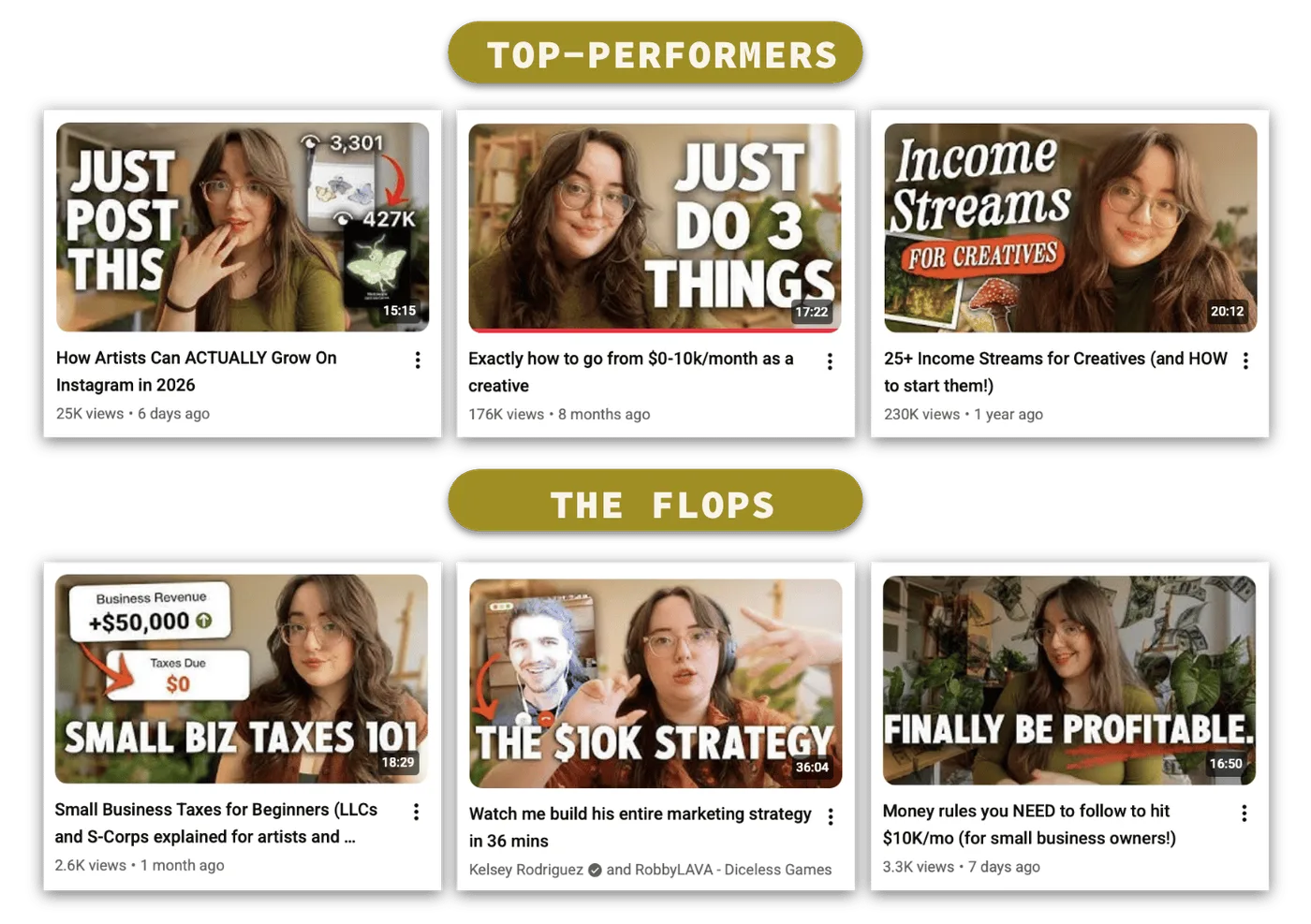
The difference is in the framing. The specificity of the title.
And, frankly… how interesting a topic it is. How beginner-friendly.
This is really useful data. If I wanted to get more views, all I’d need to do is cover more intro-level content and case studies with clear results.
Figuring this out doesn’t mean I need to pivot into only making beginner content forever. The point is that now I know what works.
My intuition told me those bottom-row videos were going to do well. They didn’t. And now I have a better model for why.
All my love,