
When I was pivoting my business into business and marketing education for creatives, I realized I had a decision to make.
I could have chosen the easy route and done the thing everyone does, which is to build a course. Record some lessons, sell access, super simple.
Except… I think selling a course by itself is the single worst thing you can do when you really value student outcomes.
Online courses alone just aren’t enough to give you real results.
Everyone’s bought an online course.
And everyone’s fallen off the wagon and failed to implement, ultimately never getting the results that the sales page promised.
… Is that the course creator’s fault? Not always.
But the model is SO predictable now and SO well known that I do think releasing a standalone course, with no serious consideration given to how to solve the typical rock-bottom completion rates, is…
Irresponsible.
At best.
What an online course is good at is delivering information. The problem is that information delivery doesn’t actually correlate with real transformation.
So… what’s the solution here?
Think about the times where you actually made a change in your life and actually had it stick.
Was it enough to get the information you needed, or were you more successful when you had:
- Accountability in the form of gentle social pressure
- Friends that had the same goal as you ready to give feedback
- And support from an expert the entire time?
This is why I think a community is the superior model here for learners AND aspiring instructors.
When I built my own community, I made some very deliberate choices.
Let’s think about the things I’m really optimizing for:
- I want my students to get results (obviously) but ALSO for those results to be as easy to get as possible. Very clear learning paths and a curriculum that’s more practical than theoretical.
- And I want the community to not revolve around just me. I want students to be forming bonds with each other and giving each other advice, creating a collaborative and close-knit group.
When you think about it, these two goals inform the entire community design and the kind of backend infrastructure I’d need to support it.
To make getting results easy for ALL students, I needed to be able to support multiple learning styles. To teach the same content a few different ways, focus a ton on examples and interactivity, and make sure the recordings of live events were easily searchable.
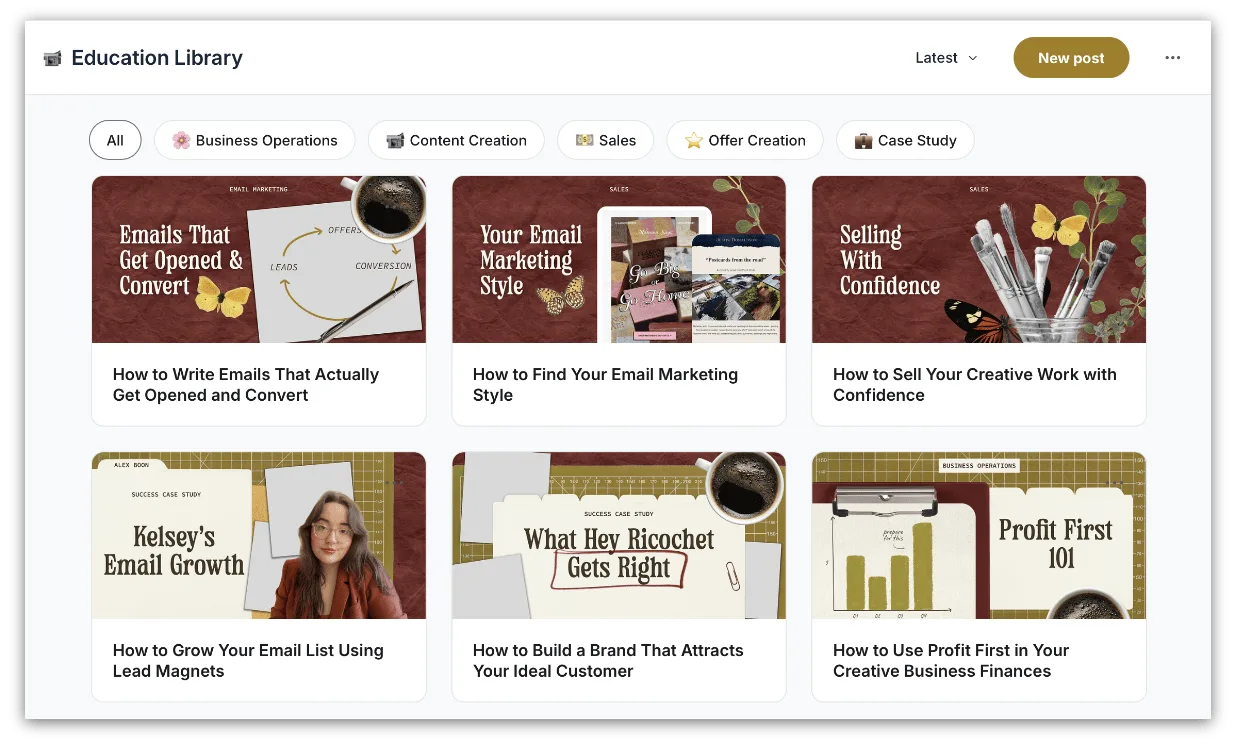
And to make the community a true community, I needed members to be able to chat and connect in a way that felt easy and frictionless, rather than something a platform bolted on as an afterthought.
And these design decisions have had a massive impact.
My team and I recently took a look at some vital community metrics, and not to sound cliche, but the numbers actually kinda blew me away.
77% of the members inside the Creative Accelerator are active every month.
Over seventy percent!!! WHAT!
…. Do you have any idea how rare that is??
Here’s the leaderboard (of which I’m very proud to be in the #1 spot of all time!!)
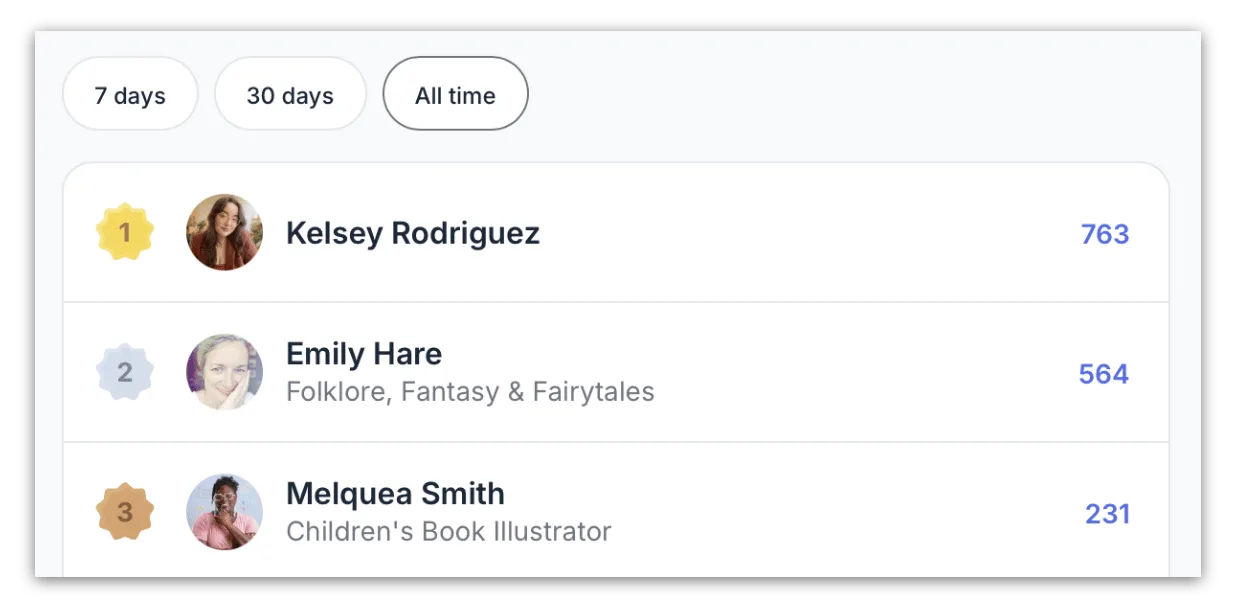
This is rock-solid evidence that the design is working. That people are coming back because there’s always something worth coming back for.
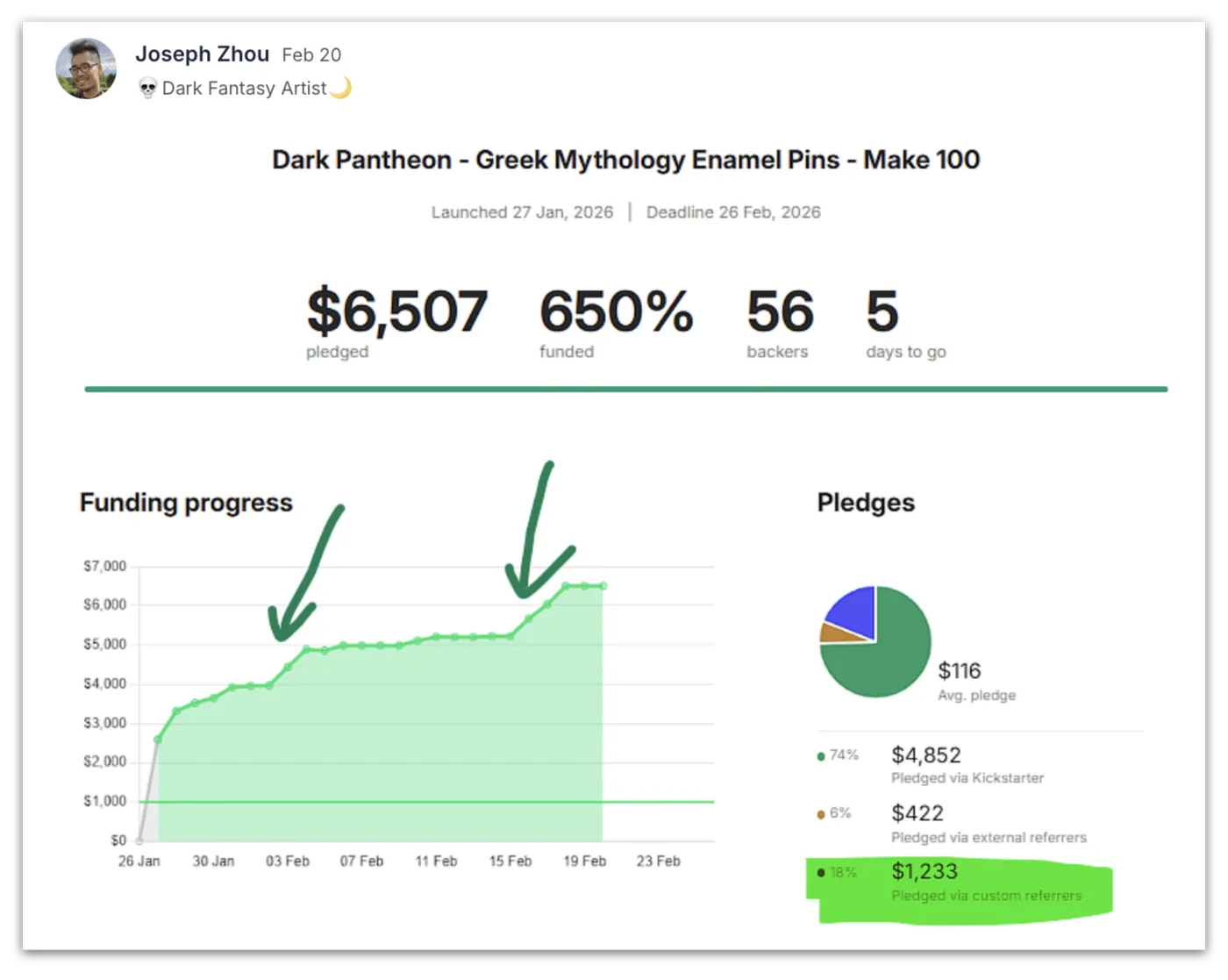
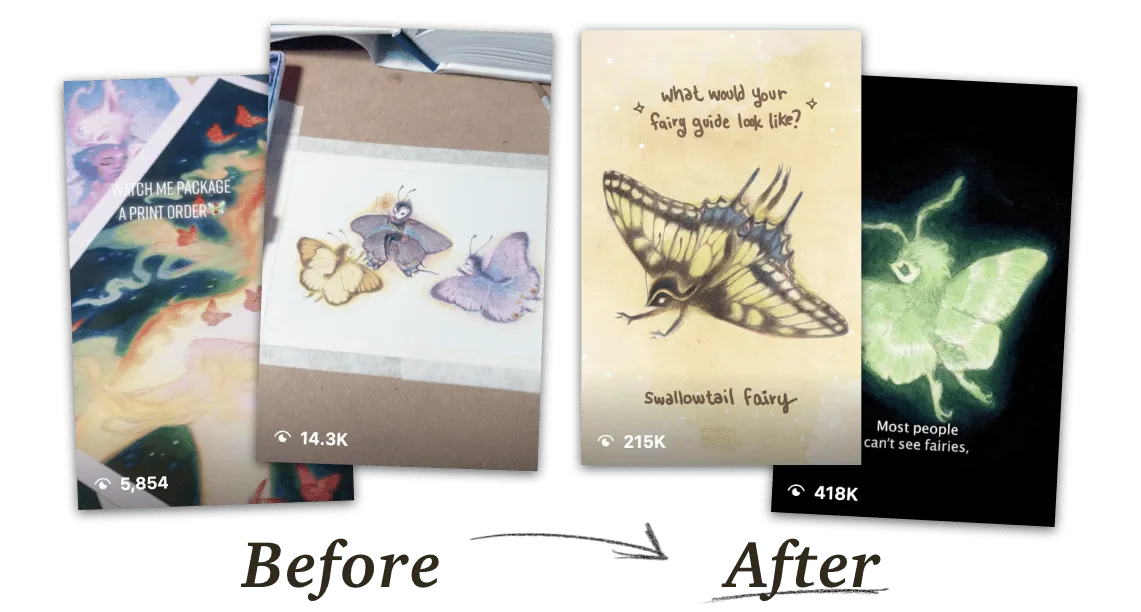
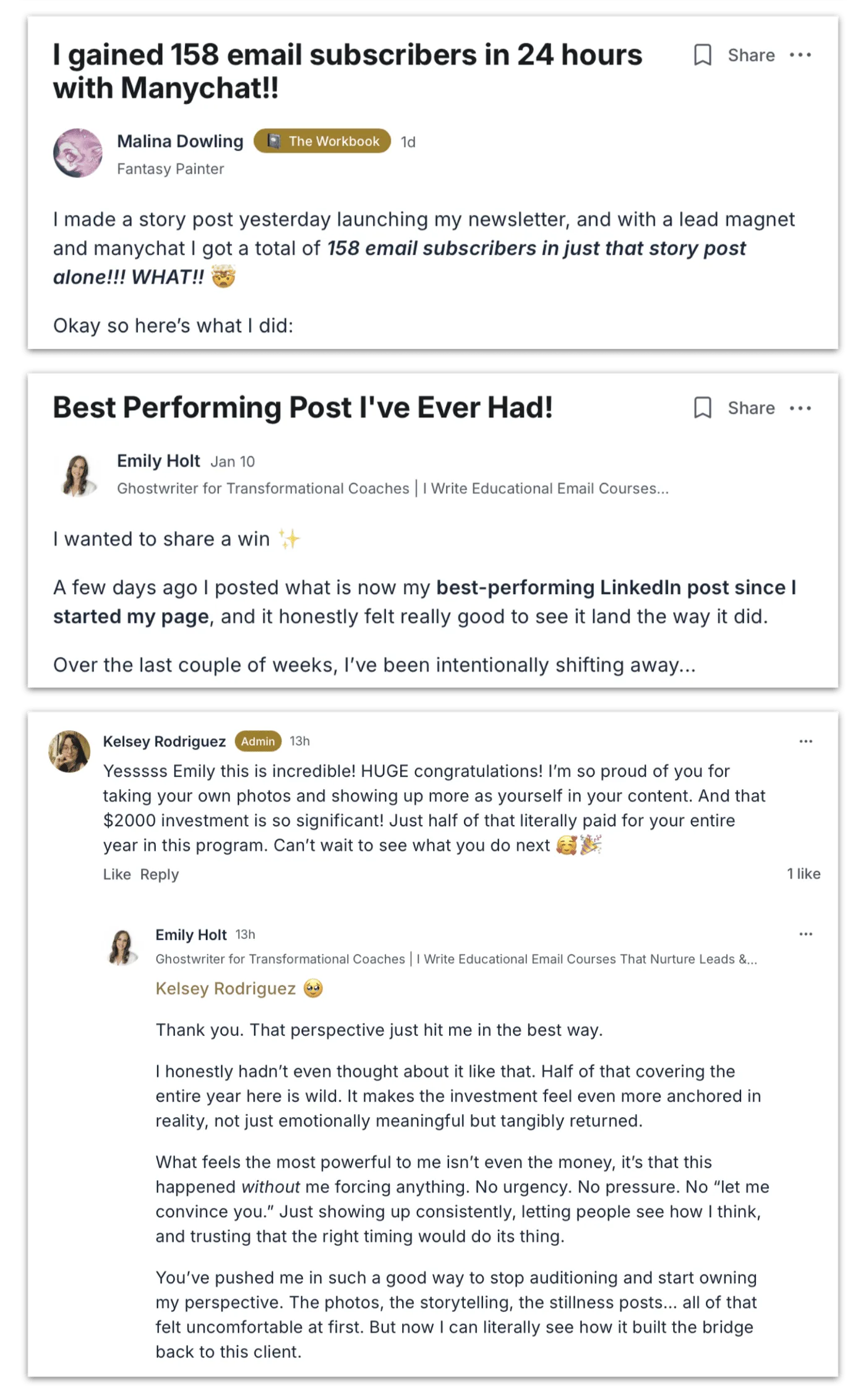
And, like I’ve been sharing with you over the past few months, the results students are getting really do speak for themselves.
My team and I have put our hearts and our souls into making this space the best that it can possibly be, and I think it shows.
All my love,