
Bond content takes your work and connects it to something your ideal customer already cares about. A value they hold, an identity, a goal, a piece of media, a hobby, an aesthetic, you name it.
It’s the first part of the three-part system I teach (bond, belief and buy content), and it’s my answer to the question I get more than any other: what do I actually post to sell my art?
In the past six months, it’s helped my students go from 4,000 to 400,000 views on Reels, sign $2,000 clients, and fully fund Kickstarters in the first three hours. And it works on any platform, because it’s built on buyer psychology, and that’s the same everywhere.
Why doesn’t anyone care about my work?
This is going to sound really brutal, but people by default will not care about your creative work.
The job of our marketing is to make them care.
Creatives assume their work speaks for itself. And I understand why! You’ve poured your soul into it.
The problem is that a stranger seeing your work for the first time doesn’t have ANY of the context that you have.
A million creatives in your niche post the same time-lapses and photos of finished work. A lot of it is genuinely beautiful. But it doesn’t give anyone a reason to care, and without that… it’s essentially useless.
People buy art because it reflects who they are, or makes them feel something. Take away the story, the values and the emotional core, and you’re competing on aesthetics and price.
And there will always be someone more talented than you or more willing to undercharge than you are. Always.
What is bond content?
We bond (get it) with your ideal customer over something they’re actually interested in. It does two really important things:
- It gets your work discovered by your ideal customer. Content similar to what they already watch tells the algorithm, “Hey, show this to this kind of person.”
- It makes your work more approachable. It gets you away from teaching and technique, and talking about the story, the feeling and the inspirations behind your work.
To do it well, let go of everything you think you know about social media and ask yourself just two questions:
- What does my ideal customer love and care about, aside from my work?
- How can I relate that back to my work?
Your ideal customer has a whole web of interests, values and experiences. So does your work, because it’s informed by your stories.
Bond content is all about finding the areas of overlap between those two webs.
It can be as simple as “Hey, if you like this, you’ll also like my work.”
Why views without bond attract the wrong people
Every piece of content you post sends out a signal, and you attract the people who are attuned to that frequency.
The content you post selects for the audience you build.
Tutorials, time-lapses, process breakdowns. All of that pulls in students, and educational content ALWAYS blows up, so most creatives lean into it.
But students want to BE you. They don’t want to buy your work.
They’ll happily comment, save and share. What they will NOT do is buy your ceramics, your prints, and especially not your high-ticket originals. So you end up with thousands of followers and a shop that never gets sales.
Your actual customers only care whether having your work in their home might remind them to call their grandma, or live a little slower, or go on that hike. The story of it.
(I’m an educator myself and I love teaching. But if you don’t want to be one, you have to post something else.)
The difference between an artist with 5K followers and a waitlist, and an artist with 50K followers and an empty shop, is almost always this.
I wrote more about this pattern in why artists aren’t making money, where I reviewed four real artists’ Instagram profiles.
Bond content examples
Malina’s fantasy world: 5,000 views to 427,000
Malina is a fantasy illustrator I’ve been working with. Her work is delicate and magical, and her faeries hint at a whole society around them. It feels like stepping into a world she’s created.
And that was the problem. She was hinting at the world, but her content was the same thing everyone else posted. Time-lapses, process photos, finished work. None of the world.
So my advice was really simple.
Just start talking.
She was hesitant at first (her work, like everyone’s, is deeply personal). But when she pushed through, the results came overnight. After ages of being stuck around 5,000 views, our first video together did 200,000. The next one did 427,000. Every one after has done at least 100,000.
The Reel that did best was slow panning photos of her work and a voiceover of her talking about the world, as though she was inside it. That’s it.
That brings in people who love fantasy books, the fairycore aesthetic, The Spiderwick Chronicles. Her old process content would never have reached them. (The whole story is in how one illustrator grew on Instagram from 5,000 to 100,000 views a post.)
She’s great at blowing my mind. At almost every group coaching call, I felt like I learned something that completely shifted the way I looked at business!
 Malina Dowling · fantasy artist
A ceramicist making matcha sets
Their ideal customer doesn’t care about clay bodies or what cones are, and frankly, they don’t want to learn.
What matters to them is slow living, craftsmanship, a great morning routine. They have strong takes on loose leaf tea and hate doomscrolling. And the ceramicist doesn’t have to guess: the intentionality, the Japanese aesthetics and the slow-morning ritual are already in her own work.
Your ideal customer will be interested in those things too. So just… talk about them.
Real artists I’ve reviewed
From my Business Breakthrough series:
- Sophia, a cyanotype artist: bond over calm and unwinding in a stressful modern life, then pitch her work as a way to have that moment more often.
- Haneen, an architectural conservationist who draws landmarks: talk about her passion for old buildings first, then introduce the work. We want history lovers, not just other artists.
- Ameera, a Muslim illustrator making art for Black women like her: bond over a shared culture (niche references someone like me is never going to understand).
Same beyond visual art. I told a game designer to make content about TTRPGs in general, not just his game. (The full coaching call is here.)
How to make bond content
Map your web of interests
Ask your customers. Or do a little light internet stalking: who follows you, who they follow, what they engage with.
In chapter four of my book there’s an activity I call the bookstore exercise. If you curated a bookstore display around your art, pulling books from all over the store, which ones feel spiritually linked to your work? For Ariane’s cozy illustrations: children’s books, gardening, Frog and Toad, even Over the Garden Wall. Those are the things to talk about.

Talk about the story, not the technique
Talk about why you make the work, what it means to you, and what you want someone to feel. You don’t have to change formats: the artists quietly pulling in consistent sales post time-lapses and carousels just like you. The difference is what they’re saying.
Compare posting:
- Time-lapses with trending audio
- Tutorials going over your process
- Before/after carousels of your art’s growth
with posting:
- Time-lapses where you talk about the story and emotion behind the piece
- The bits of inspiration behind your latest piece, and what they meant to you
- Carousels showing the hidden symbolism in your pieces, and what you hope they remind someone of
The first list attracts students. The second still shows off your skill, but it articulates the story.
That’s the difference between building an audience of casual fans and an audience of real customers.
Keep the formats simple
No fancy production needed. When Joseph (a dark fantasy artist with four months of runway) asked how I’d help him go full-time, I gave him two formats:
- Talking-head Reels. A hook, five minutes of recording, edited to 45 or 60 seconds. About 20 minutes from idea to posting, about his story and the folklore behind his work.
- B-roll plus voiceover. A couple of hours a week filming his products styled and worn, then talking over it about the same things.
It’s possible to be wildly successful without fancy gear or fancy editing. It’s all about the messaging and how well you actually understand your ideal customer.
(The full plan, including the math on how often he’d need to post, is in how to become a full-time artist and how do I go full-time in just 4 months?)
if you want me to walk you through it…
Bond Content Blueprint
A two-hour workshop on exactly this: finding your customer's web of interests and turning it into content that makes strangers care about your work before they ever see a price.
Get the workshopPart two: belief content
Now they like us and get our story. But in the back of their mind they have a TON of doubts. Is this really worth it when I could get something similar at Target? Framing a print is such a pain. What if this handmade mug breaks in the dishwasher?
Belief content shows someone that yes, your work IS for them, and yes, you CAN be trusted. You make a claim and back it up, or dismantle a false belief with evidence:
- Compare your product to a mass-produced alternative.
- Debunk a misconception. Worried your mug will break in the dishwasher? Show the one you made years ago and use every day.
- Show why it costs what it costs. The materials, the hours, the years mastering your craft.
- Share reviews and testimonials. Maybe most important of all.
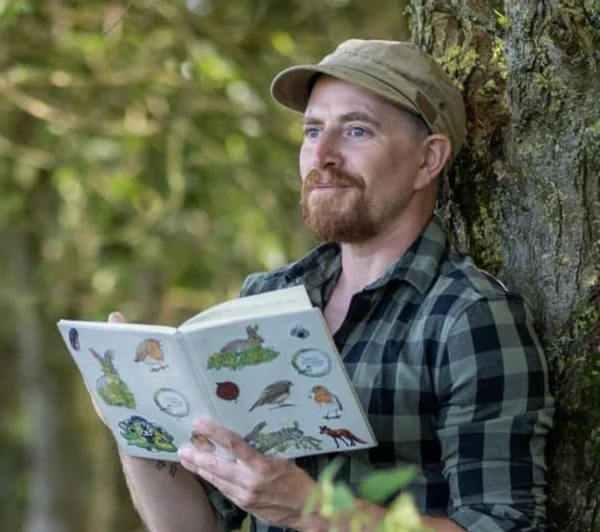
The more specific and verifiable, the better. It’s why I make such a point of highlighting student wins. Like Alex Boon, who runs The Nature Journaling Circle. He’s been putting these concepts into practice, and a video we planned together became the most popular thing he’s ever posted.
Belief content is really just about transparency. We address every objection holding someone back and put all our cards on the table. Once you’ve built that trust, they won’t need to be aggressively sold to.
Part three: buy content
And then comes the part everyone forgets, which is the MOST important.
We have to ask for the sale.
A call to action, a sales email, a shop update. The least clever part of the strategy, but it HAS to be there. So many creatives spend MONTHS on a collection… and post about it once. No sales, so they ghost their own business. It breaks my heart.
Because their audience didn’t see it. On a good day, maybe 10% of your followers see any given post, and most of them were half-watching on the way to work or falling asleep.
You’re not annoying anyone by repeating yourself.
(If the words themselves are the hard part, that’s what Selling Made Simple is for, and I wrote about selling more to the people already buying too.)
Why your launch post flopped
Buy content converts because of everything that came before it.
If you’ve only ever posted time-lapses, your launch post lands in front of people who want to learn your technique. So OF COURSE it flops. Your audience doesn’t hate you. They’re just not the right people for that offer, which comes right back to bond content.
But if you’ve bonded with the right people and dismantled their objections, the ask can be almost embarrassingly simple. A link and a sentence: “Hey, if you’ve been enjoying my work, here’s how you can support me.”
That’s it.
Where to go next
- The three-part system, step by step: content strategy for artists
- Packaging it so more people stop: why you aren’t getting views
- A workflow that fits how you think: creator archetypes
- Where to post it: the best social media platform for artists
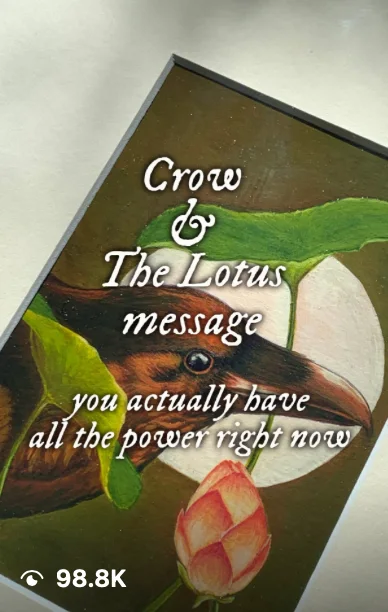
And if you want to post bond content every week with feedback, instead of just reading about it, that’s what Creating Your Content World is for. Chanthi, who paints birds and flowers, was getting a couple thousand views a post before she joined. During the challenge, her next post did 98.8K, and she woke up to 87 new followers.
At the core, think about benefits, not process or technique. Lean into story and emotion, and your business will thrive.
Talk soon,