Email marketing for artists is the simplest, most reliable way I know to turn people who like your work into people who buy it. Your business really only needs two platforms: one discovery platform, and an email list. The discovery platform is where new people find you. The email list is the one you own, and it’s where the sales happen.
I only started sending consistent newsletters and growing my list in 2025. Since then, nearly 22,000 people have joined it, and almost every time I send a sales email, I make money.
New subscribers per quarter (Jan 2025 – Sep 2026)
Why do artists need an email list?
Unlike every other platform, you own it. There’s no algorithm standing between you and those people’s inboxes. If you have their email, they will get your email.
That’s crazy. You can send them a thing and they will actually get it.
Every social platform belongs to someone else. They can change the algorithm, tank your reach, or just shut down. And an email subscriber is about 40 times more valuable than a follower on Instagram. They’ve indicated interest. They convert at a much higher rate.
And platforms really don’t want their users to leave. God forbid you link your Patreon or your email list or your shop update. Let’s send you to the shadow realm for the sheer audacity. Nurturing platforms (email, Patreon, Substack, even Discord) don’t punish you for wanting to sell your work.
If you are not advertising your products to an email list, you are leaving tens of thousands of dollars very reliably on the table.
(If you’re still choosing your discovery platform, I walk through it in which social media platform is best for artists.)
“But nobody opens emails”
“Oh my god, Kelsey, an email list? I don’t open my email.”
Okay, good for you, girly. A lot of people (like me, at least) love getting email newsletters. And compared with how many followers see your posts, it’s night and day. My email list has a consistent 40 to 50% open rate. Normally in this industry it’s like 20%, if that, honestly.
When should you start an email list?
If you’re brand new and selling through Instagram stories and DMs, get some revenue coming in first. Then create an email list. (That’s the order I’d follow from zero, and the whole plan is in how to sell art with no followers.)
You don’t have to do everything at once. For five years I posted only on YouTube and scaled to six figures because I didn’t split my focus. (More in the habits I’d build to make $10K a month.)
How do artists grow an email list?
Three things changed everything: simple lead magnets, writing emails consistently, and selling consistently (so, shockingly, I started making sales consistently). These days my list gets something like 30 to 50 new people a day. In one 30-day stretch, I gained over 1,000 new subscribers.
Give every piece of content a purpose
Every video I make is designed either to sell something or to build my email list, usually with a free resource.
So just about every video ends with a call to action. Often I’ll repeat it three times: beginning, middle and end. It’s never more than a sentence or two, and it’s WAY more effective than only having one at the end. On YouTube, put your first one well before your average view duration. For one of my videos that’s 4 minutes and 48 seconds, so around the 90-second mark is a good spot. (More in YouTube’s monetization changes.)
Content creation is a means to an end. The goal is to get people onto your email list and have them buy your work.
Instagram stories are a sign-up machine
When I started posting on Instagram again on July 1st, my monthly email list growth rate went up by 140%.
Where my new subscribers came from (first month back on Instagram)
Stories!! The thing you can make in under 90 seconds while you wait for the toaster to finish!!
A YouTube video with an email call to action brings in 100 to 150 new subscribers in its first week. One Instagram story brought in 50+ new people and took under 90 seconds. (I ran the numbers on IG vs YouTube. I’m not quitting YouTube.)
The setup is simple. Offer a freebie in a story, tell people to reply with a keyword, and an automation delivers it and captures their email. You can do the same with links to your products (even if someone doesn’t buy, they might join your list). Malina, one of my students, launched her newsletter this way and added 150+ people from one Instagram story in 24 hours.
Content that attracts the right people grows the right list
A list is only as good as the people on it. Emily Hare paints little monsters. One post (Your Birth Month, Your Monster) did 2.4M views, and her newsletter grew 6.8% in 30 days off the back of it.
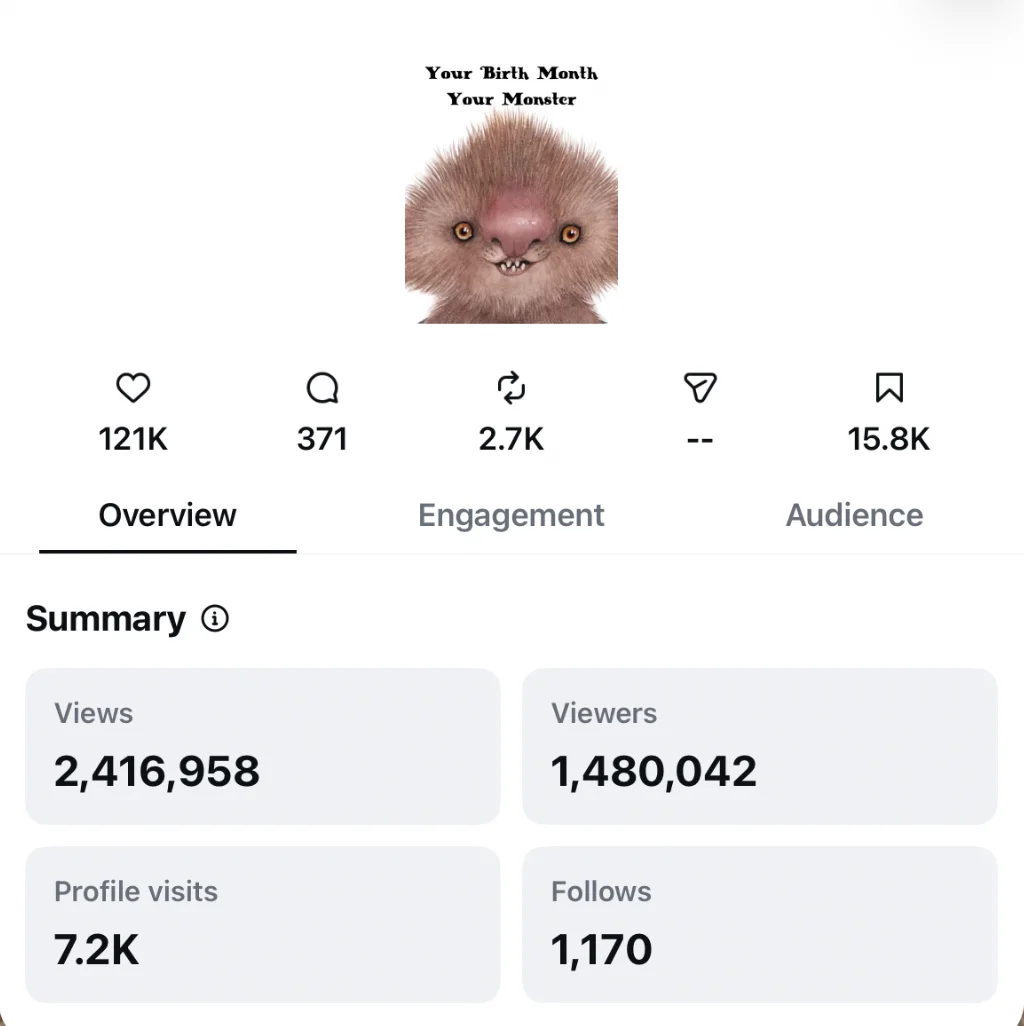
NICE. Pretty solid growth on my newsletter in the last 30 days. That viral post (now at 3m views!!) has definitely helped! WOOOOO!
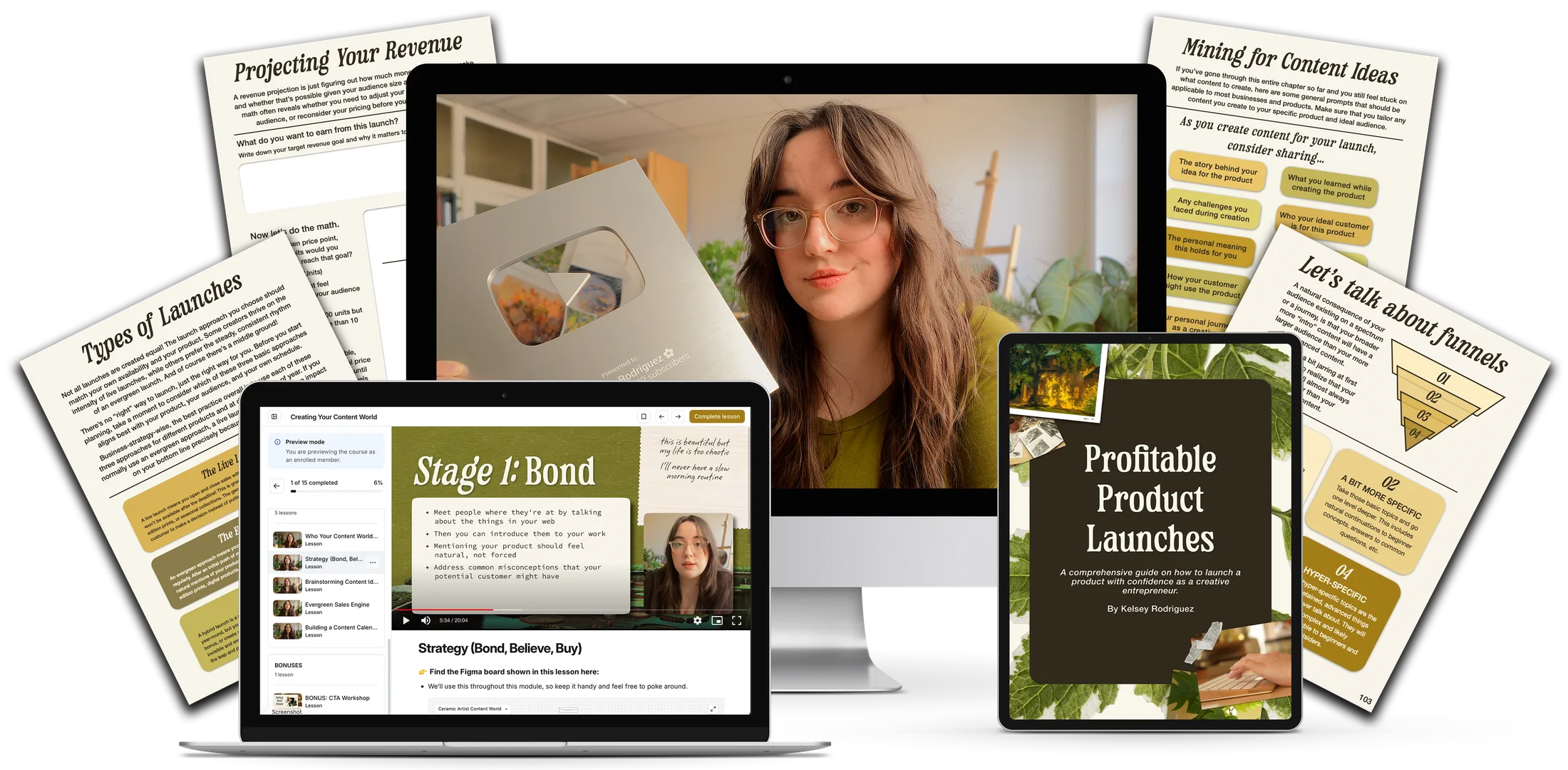
That kind of content is what Creating Your Content World is about: seven weeks live with me, writing the posts that bring the right people in. (More student wins here.)
Do you need a freebie to get people on your list?
A freebie definitely works (lead magnets are a big part of how I grew mine). But if you’re an artist, you might not need one. If you write emails people who like your work genuinely want to read, the emails themselves are the value proposition. No 15% off, no lead magnet. That’s a great place to be.
What I would do is give your list a little bonus, like first dibs on new work before you post it publicly.
What should artists write in a newsletter?
Write the kind of emails you genuinely think a fan of your work would want to read.
If it were me, I’d talk about the same things my content does (the stories, emotions and origin of my work), a little more in depth. I wouldn’t talk about process. I wouldn’t try to educate unless I wanted to be an educator. I’d go really hard on story. And if I was building a world (fictional characters, a novel, a webcomic), I’d talk about that world and how I’m building it.

Make the newsletter a creative project
A few months after Malina joined my program, she brought up newsletters on a call. She knew she should have one. But it felt like just another thing on her to-do list.
Malina creates absolutely stunning illustrations of the fae, and for ages she’d had ideas about the world her art is set in. So what if her newsletter wasn’t just marketing? What if it was the world building she’d been wanting to make time for? The mythology behind her fae, the rules of her world, the stories behind each piece. Then a simple call to action for her prints.
That simple reframe turned a vital (but kind of boring) business task into an opportunity to be creative.
End every email with a call to action
“Hey, I have this piece available. Just so you know, it’s here. It might not be here next time. It might sell, who knows?”
My own newsletter is one idea a week: insights from my journey (the wins, the flops, and the numbers behind both), business advice you can use the same week, and first access to new products.
How often should artists email their list?
I send one newsletter a week, and I tell people that up front when they join.
During a launch or a sale, I send more. Sometimes a lot more. People can opt out of the launch emails and still get the weekly newsletter, so nobody gets buried.
Should you segment your email list?
Yes, and it doesn’t have to be complicated. Whenever someone buys something:
- They get tagged based on what they purchased.
- Depending on what they ordered, they might get emails about how to get the most out of it, how to take care of it, how to use it.
That tag lets me reach out very intentionally. When I’m running a sale on something they don’t have yet: “Hey, I think you’re going to love this. It dovetails perfectly with the thing you have because of this reason.”
These emails convert way better than normal social media posts, and even better than normal emails to my whole list. These people already trust my work enough to buy it once.
It works the other way too. If some people already own the thing on sale, I leave them out. You bother your list less and keep open rates high. Same week, smaller, warmer group:
Open rate: whole list vs one warm segment (same week)
(The whole system, tags and all, is in how to organize your creative business.)
How to write a sales email that actually sells
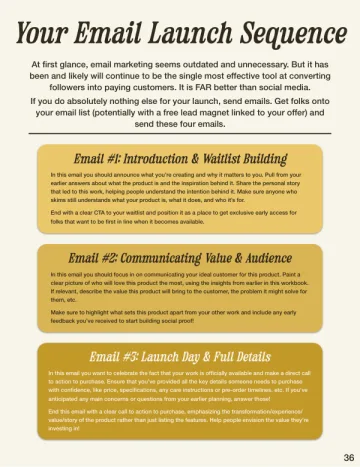
When was the last time you actually said, “Hey, here is this thing. Do you want it? Here’s a link to it”? A lot of creatives write the newsletter and never ask.
Two emails, over $4,000
One Black Friday, I had planned out this whole elaborate thing. Then I got slammed with work, then food poisoning, and the plan got tossed out the window.
So I sent a super simple email: “Hey, I have food poisoning. I was going to do this whole thing. So here’s the deal.” A three-day sale on my workbook, a testimonial and a countdown timer. I didn’t let myself overthink it. Two days later I sent a normal newsletter with a brief reminder that the sale ended that night.
I did not mention this sale literally anywhere else. Those two emails generated over $4,000 in three days. (How to build wealth as a creative has the full story.)
One email, sent twice: $2,800
Over Labor Day weekend, I sent one email about a bundle of my digital products to about 13,600 people. Two days later, I resent the exact same email to the people who didn’t open it.
That one email made $2,800.
Resending to non-openers is one of the easiest wins in email. You already wrote it.
Short emails count
When I launched something new in the summer of 2025, ONE email made over $700 in a few hours. More recently, a single email of about 200 words made $3,222 in a week. It doesn’t have to be long. It has to go out. (Planning a whole launch around emails like these? That’s what Profitable Product Launches is for.)
What I put in every sales email
Three things got me results immediately:
- A countdown timer and a testimonial in every single sales email. I know it sounds overdone, but it works. A quick review (“Hey, I loved this thing”), then the countdown: you can’t defer this forever.
- More specific calls to action. Instead of “buy the workbook,” something like, “Get my exact system.”
- Asking people why they didn’t buy. “Hey, you added this to your cart, but you didn’t check out. I just want to understand why.”
(The full story is in the three bottlenecks of a creative business, and if you never know what to say when you sell, start with Selling Made Simple.)
People like your work. Reminding them that you have other stuff is not being annoying. It is being good at your job.
Welcome sequences and automations for artists
Automations are one of the cozier ways to build leverage into your business: a sequence that nurtures new subscribers without you writing an email every week, maybe with a sales email in it that sells on autopilot. On a budget, I’d focus on automations first. (The cozy way to build wealth goes deeper.)
The other one I love is the follow-up after a purchase. Wait until they have it in their hands and see how great it is, then show up with a cheeky little “Hey, do you want something else?”
Sell prints? “I have prints of this same piece if you want to give one to a friend.” They don’t have to be sleazy. Make them fun and full of personality. People will actually say thank you. (How to raise your average order value has more of these.)
What email numbers should artists track?
Ditch the vanity metrics. When sales or sign-ups spike, ask what you posted just before it. (Stop trusting your gut on content walks through the same exercise for views.)
On the first of the month, check three numbers: list growth, open rate, and sales. If you know those, you know what to do about each one.
the one I'd pick for you…
The Creative Accelerator
An email list that sells every time you send, and the three numbers you check on the first of the month. You bring the email, and we look at it together and fix it live (plus group coaching twice a month and every course I make).
Learn moreWhere to go next
- Pick your one discovery platform: which social media platform is best for artists.
- Set up your list and your first sales: how to sell art with no followers.
- Add tags and follow-ups: how to organize your creative business.
- Write the sales email: Selling Made Simple.
And if you want to see how I write mine, join my newsletter. It’s one idea a week, and you can leave anytime.
Whenever I send an email, I make money. I want that for you too.
Talk soon,