
If you want to know how to launch a product as an artist, here’s the short version: treat a launch like an EVENT. You tell people it’s coming. You tell them it’s here. You remind them before it’s gone. And you keep showing up the whole time, instead of mentioning it once and hoping for the best.
Learning this one skill has doubled the revenue in my business. One live launch brought in $33,145 between October 22 and November 2, 2025. Promoting brand-new evergreen products consistently, all year long, brought in another $56,985 between November 2024 and October 2025.
Why your product launch flopped after one post
You spend weeks (or months) making something you’re genuinely proud of.
You mention it once. Maybe twice.
It doesn’t sell right away, so you stop talking about it and quietly move on to the next thing.
I used to do this ALL the time. I would ghost my own business. And I’ve talked to countless artists who do the exact same thing. Their work is incredible. They just don’t have the confidence, or a system, to actually launch it.
Most of your followers never saw your last launch
During one launch, I was convinced I was annoying everyone. I’d talked about it SO much.
Then the emails and DMs started coming in…
“Oh no, did I miss this? I never heard about it. Can I still buy it?”
Only a small fraction of your followers will ever see any one post. And the ones who do are busy. They’re not going to remember the shop update you mentioned ONE time two weeks ago.
When you talk about your work and your offers multiple times a day, every single day, you are not annoying anyone. You are reminding them that you exist. (I go deeper on this in the habits I’d build to make $10K a month.)
Do launches work if you don’t sell a course?
Yes. Launching isn’t a “course people” thing. It’s a “you made something” thing.
Print collections. Original paintings. Commission slots. Enamel pins and stickers. A workshop, a zine, a ceramics drop, a Patreon tier, digital brushes, a calendar. The product changes, the launch doesn’t.
Learning to launch is arguably the most important skill in business. If you can’t consistently promote a product, you can’t get sales. And if you can’t get sales, you don’t have a business. Period.
What should your first launch be?
If you’re launching for the first time, I’d launch a low-ticket digital product. And I’d do it ASAP.
Pick ONE problem your audience is struggling with and make something that solves it. It should be VERY specific. “Get better at drawing” is too big. “How to master drawing hands in 60 mins even if you’re a total beginner” is perfect.
The outcome needs to be objective, tangible, and doable in a short amount of time (ideally real results in under a month). Keep the format simple: a workshop recording, a PDF guide, a short video series. Something you can sell over and over without any additional labor. Price it somewhere between $17 and $47, so it’s an impulse buy.
ONE really good low-ticket product can easily make you $50K a year if you’re serious about promoting it consistently.
(If you sell physical work and want ideas for what to make next, grab my free list of product ideas. And if you’re starting from zero followers, read how to make your first $1,000 a month from your art.)
Live launch vs evergreen launch vs hybrid: which one should you pick?
There isn’t just one way to launch. Once you know which one fits your product, you can plan the whole thing out in advance.
The live launch
A live launch has a start and an end. Doors open, doors close.
My $33,145 launch was one live launch, planned four weeks out, with emails and posts mapped on a calendar instead of made up the morning of.
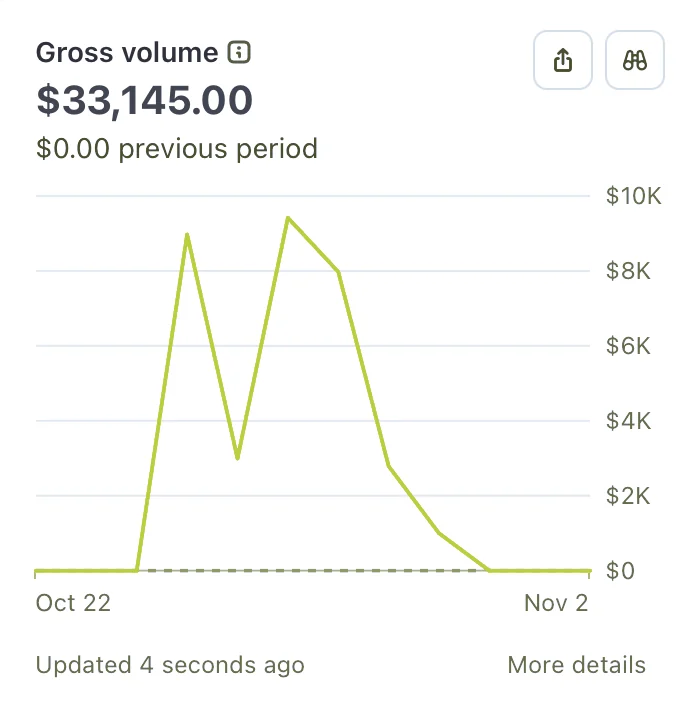
In the five weeks before it, I posted EIGHT main channel YouTube videos (two editors, a consultant, my first paid ads). That is not my normal schedule, and you don’t need to do all this. I did it because, frankly, I’m a sick little freak who LOVES work.
The launch itself followed the shape I’d use for almost anything: a free live workshop on a Saturday, the replay, doors opening, reminders while doors were open, and a final reminder the night they closed.
And it’s not just me. Alex Boon ran his first webinar and sold 10 spaces on his new course, $2,000+ in two hours.
I just did my first webinar and sold 10 spaces on my new course before I had even finished speaking.
The evergreen launch
An evergreen launch doesn’t end after week one. It keeps selling for you.
Back in 2024, I released my first book and went SO hard on content for that launch. In January, I made something like $10,000 from that product alone.
But then things kind of stagnated.
Your business is like a party. When you launch something new, the people already in the room (your existing audience) buy first. When my sales dipped, I’d talked to everyone already at the party. So I had to bring the right new people into the room.
I’m a plant person, so: we could go out on the street and try to convince random people to come in. Or we could plant an entire GARDEN that looks so good anyone walking by would stop to see what we’re doing.

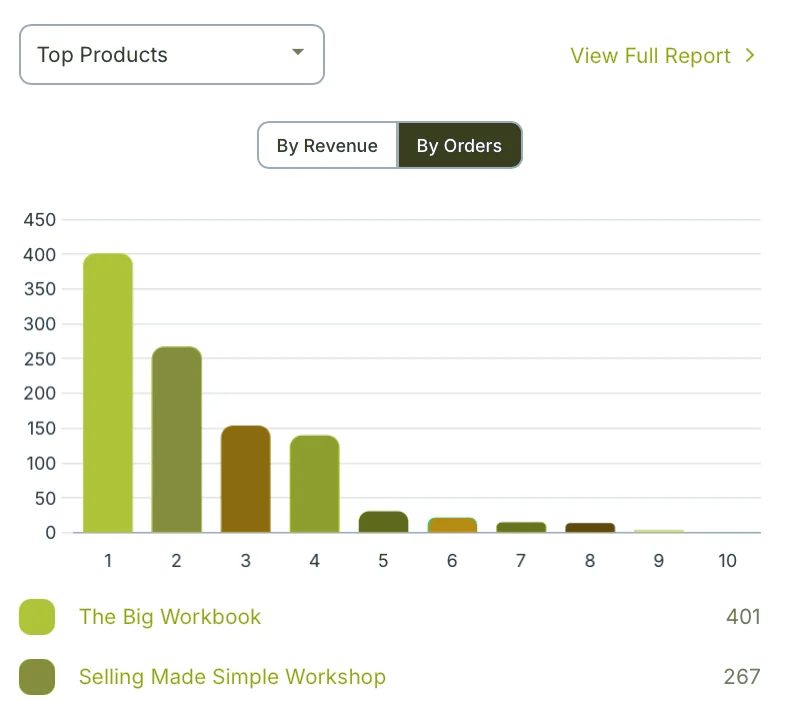
That’s evergreen content. Each video is a plant that keeps producing 24/7. So I committed to creating 10 to 20 evergreen videos, each with a strong call to action pointing people toward the book. That eventually led to almost $50,000 from that one product in a single year. (The full story is in the three bottlenecks every creative business hits.)
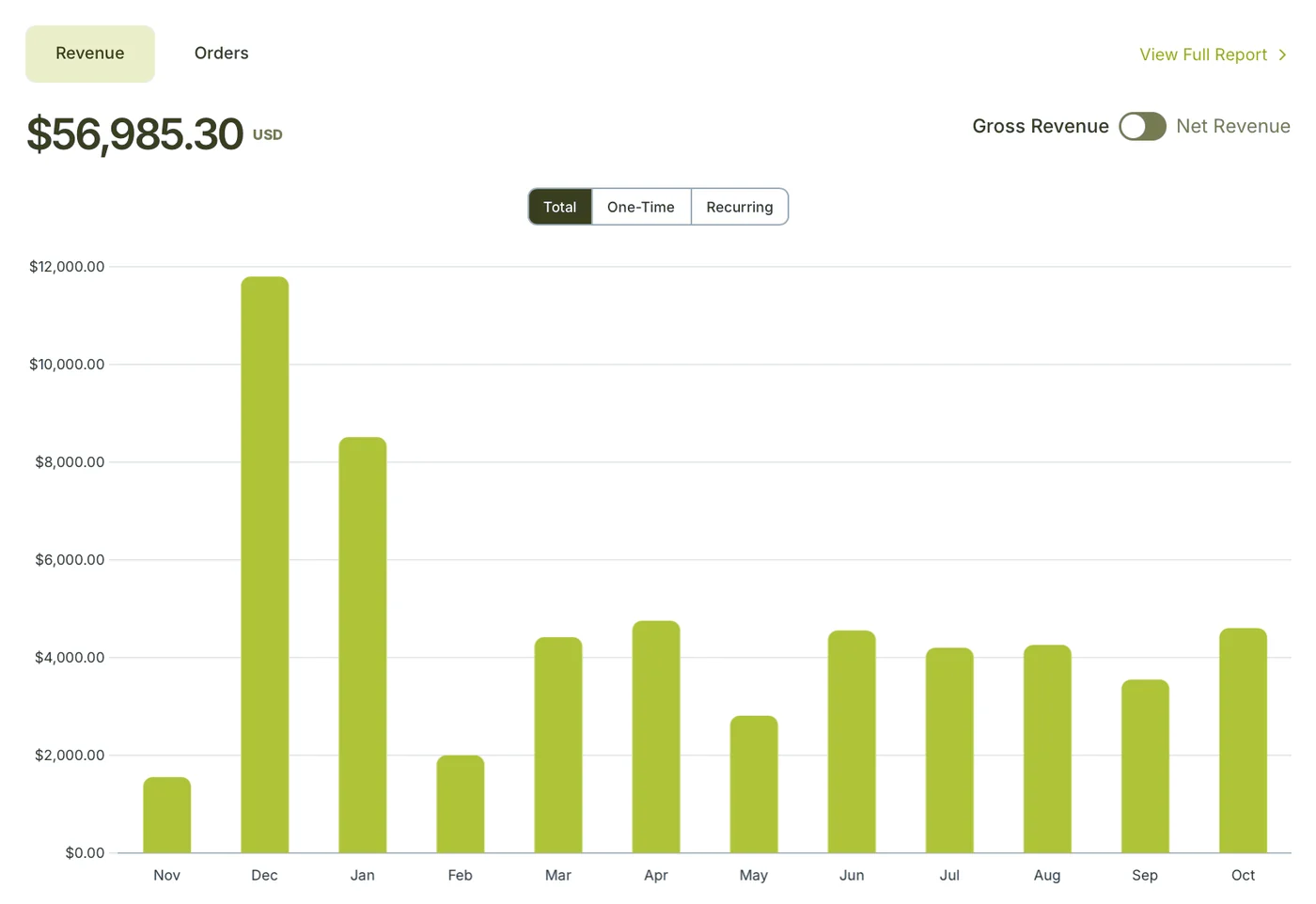
Build a product people want → a killer sales page → a library of content for the ideal customer → a simple call to action to the sales page. That’s it. I honestly feel stupid for not doing it sooner. My business had been stuck at $100,000 a year since 2023, and that year was the first real progress toward the next level. (Here’s the exact plan I’m using to double my revenue.)
The hybrid
Keep your low-ticket products on evergreen, and a few times a year run a more intense, high-ticket offer (like coaching or mentorship). BUT your revenue is going to be VERY spiky. Launching three or four times a year leaves little room for error, so you need good financial planning. (I break down the trade-offs in how to grow any creative business to $10K a month.)
How do you warm up your audience before a launch?
Your launch post converts because of everything that came before it.
If you’ve only ever posted time-lapses and process content, your launch post is landing in front of people who ultimately want to be you, not buy from you. So OF COURSE it flops. Your audience doesn’t hate you. They’re just not the right people for that offer.
But if you’ve bonded with the right people and dismantled their objections, the ask can be almost embarrassingly simple. A link and a sentence: “Hey, if you’ve been enjoying my work, here’s how you can support me.”
That’s the whole idea behind bond, believe and buy content, which I walk through in my content strategy for artists.
Why every launch needs a deadline
After I built my evergreen library, I had an increasingly warm pool of leads, but no real urgency. There was no reason someone should buy the book now and not six months from now.
Three things moved the needle immediately:
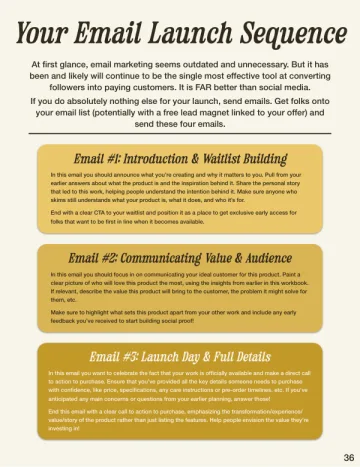
- I added a countdown timer and a testimonial to every single sales email. I know this sounds so overdone, but it works.
- I rewrote my calls to action to be way more specific. Instead of “buy the workbook,” something like, “Get my exact system.”
- I started actually asking folks why they didn’t buy. If I emailed too much, if the sale should have been longer… I wanted to know all of it.
Two emails, $4,000
One Black Friday, I had planned out this whole elaborate thing. Then I got slammed with work, then food poisoning, and the plan got tossed out the window.
So I sent a super simple email: “Hey, I have food poisoning. I was going to do this whole thing. So here’s the deal.” A three-day sale on my book, a testimonial and a countdown timer. Two days later, a normal newsletter with a brief reminder that the sale ended that night.
Two emails. Nowhere else. Over $4,000 in revenue I would not have otherwise made. (More on that in how to actually build wealth as a creative.)
More recently, I made $3,222 from a single email. About 200 words.
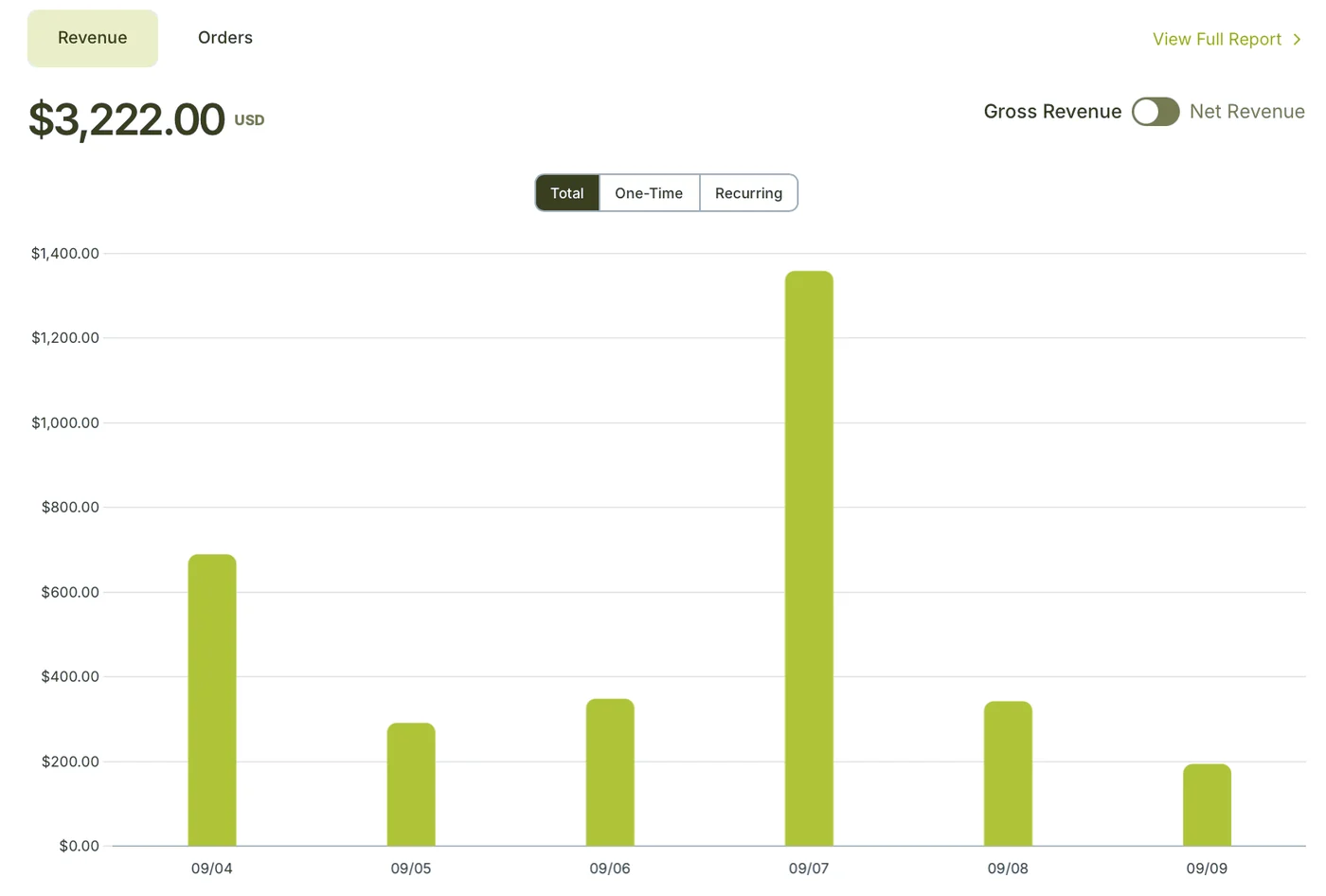
That’s the bar.
What does a launch calendar look like?
The calendar is what makes a launch feel calm instead of chaotic. Every morning you already know what today’s post is: day 3, day 10, launch day, last call. You just show up, post, and get back to the studio.
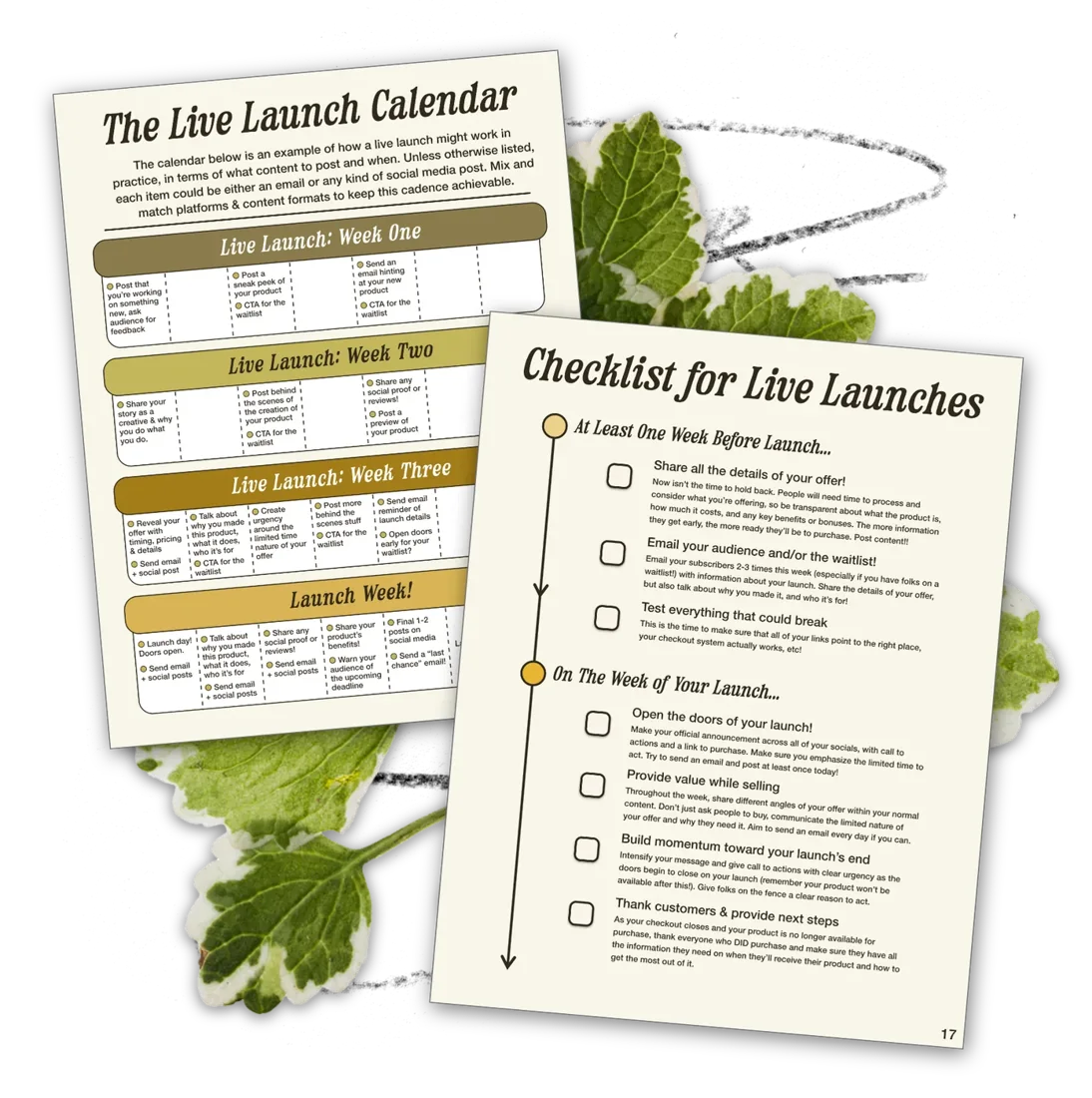
Here’s how I’d schedule Black Friday weekend (the last three months of the year are, without fail, the best sales season for creative businesses). Yeah, yeah, “Small Business Saturday.” But in Adobe’s holiday shopping data, Saturday was competing for the lowest sales day of those four. So if it were me:
- Launch your sale or special offer on Thursday.
- Promote it HARD on Black Friday (two to three times more than usual if you can).
- Add a special bonus just for people who shop on Saturday.
- Keep promoting it hard Sunday through Monday.
- Close the sale Monday night, and say so, so people know they have to get off the fence.
Most sales advice tells you WHAT to do but never HOW.
for when you post once and hope…
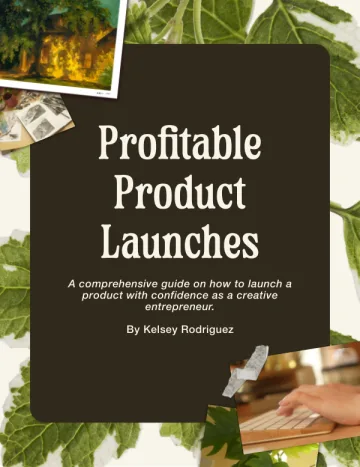
Profitable Product Launches
The day-by-day version for live, evergreen and hybrid launches: calendars, checklists and prompts that answer "what do I post on day 3 versus day 10?", plus my $33K launch debrief.
Get the guideWhat to do after launch day
Pitch that product ALL the time. Stories every day, a comment-keyword automation that sends the link to DMs, a call to action in your content.
Then look at what happened. I view every launch as an experiment. If something doesn’t work? Cool, I’ll change it next time. When you track what you post and what sells, planning your next $2,000 weekend becomes trivial.
Why do launches get harder every time?
People buy your course, learn the thing, and leave (because you did your job). If your audience hasn’t grown, each launch sells to a smaller pool. That’s not failure. It’s just the shape of that model. Two ways out: Keep bringing new people into the room (that evergreen garden again). Or launch a new offer at a new price point to the customers who already love your work. It is SO much easier to get repeat customers than to find new ones.
And a launch that stalls isn’t over. Joamette Gil had a Kickstarter stall at 33%. She came back and hit 60% in 48 hours.
this relaunch made more actual money on Day One than all my previous campaigns, except one…!
 Joamette Gil · Kickstarter creator
(More results like hers on the student wins page.)
Where to go next
Launching sounds simple, and that IS the point. You just have to keep doing it after the first post.
- Not sure what to say when you ask for the sale? Start with what to say when selling your art.
- Launch posts keep flopping? Read my content strategy for artists.
- Sales started strong and then stalled? Read the three bottlenecks every creative business hits.
- Deciding between products, courses and coaching? Read creative business models.
And when you’re ready to plan the next one, Profitable Product Launches has the calendars.
Talk soon,